THE HOUSE ON CEDAR STREET (working title)
Feature Film | Drama | Contemporary
By Mike Ahuja
Logline
When Amira Husseini, a teenage Palestinian girl who illegally immigrates to the U.S., is forced into hiding from ICE in post-9/11 America, she finds refuge in an unexpected place: the Brooklyn home of a compassionate Israeli Jewish family. As fear closes in, an unlikely bond forms—challenging inherited narratives of enemy and ally, and revealing the cost of survival in a divided world. Forcing all of them to confront inherited trauma, political identity, and the true meaning of “never again.”
Concept & Inspiration
A modern reimagining of The Diary of Anne Frank, this story transplants the themes of secrecy, moral courage, and shared humanity into contemporary America. Instead of Nazi-occupied Europe, the danger is bureaucratic, invisible, and omnipresent. Instead of an attic, it’s a modest Brooklyn brownstone. The tension isn’t only about being discovered—it’s about whether people raised on opposite sides of history can choose compassion over fear.
WHY THIS STORY — WHY NOW
The House on Cedar Street reimagines The Diary of Anne Frank for the 21st century—not as homage, but as confrontation. In an era defined by forced migration, rising nationalism, and moral fatigue, this film asks an uncomfortable question: Who deserves sanctuary when the law says no? The danger is no longer soldiers in the street—it’s paperwork, surveillance, and a knock at the door. The hiding place is no longer an attic—it’s a Brooklyn home surrounded by freedom Amira cannot touch.
Setting
Brooklyn, New York — present day.
A neighborhood where Arabic and Hebrew prayers echo within blocks of each other. A city built by immigrants, now haunted by who gets to stay.
Main Characters
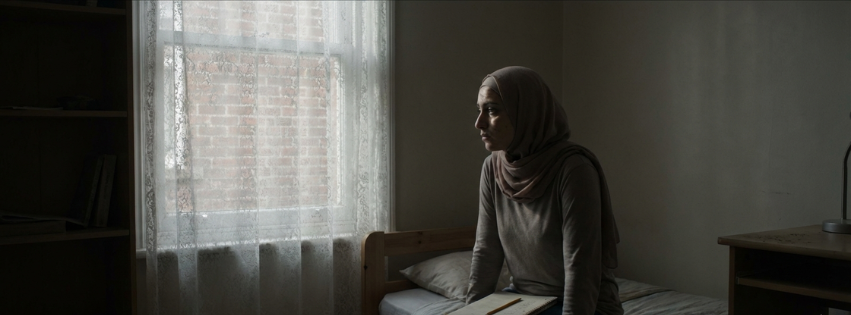
- Amira Husseini (16) – A Palestinian girl who is observant, intelligent, quietly resilient and in constant fear. She documents her days in a notebook she calls “proof I was here” as evidence of existence, not legacy.
- Leah Ben-Ami (40s) – Israeli-born Jewish mother, raised on survival stories, now forced to decide what survival means when she holds power while carrying generational trauma and moral fatigue.
- DAVID BEN-AMI (40s) – Leah’s husband, a history teacher who believes stories can heal what politics can’t and memory carries obligation, not just pain.
- Noah Ben-Ami (17) – Their American-born son, who slowly becomes Amira’s confidant and window to the outside world and learning what safety costs others.
STORY OVERVIEW
Act I – Arrival
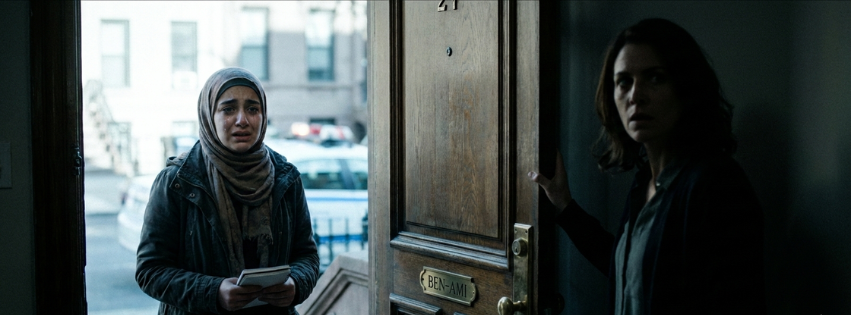
Amira arrives in New York after a perilous undocumented journey only to lose her last safe contact during an ICE sweep. During that ICE sweep, she is abandoned by her last contact and collapses outside the Ben-Ami home. Leah opens the door—an act that cannot be undone. Against instinct and fear, Leah opens the door.
Act II – The Hiding
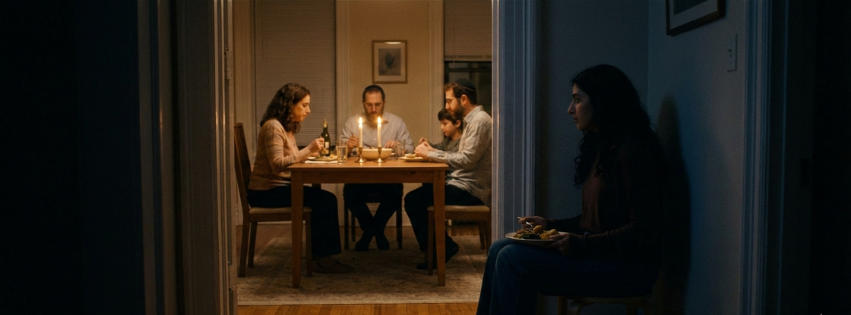
Amira is concealed in a spare bedroom in a small upstairs room that becomes her world. She listens to life through walls as days blur into routines of silence — Through walls and windows, she observes a life she cannot participate in. Shabbat dinners, street protests, news reports about deportations and Middle East violence. Slowly, guarded exchanges and conversations evolve and turn into shared meals, language lessons, and laughter – connection. Amira writes daily, mirroring Anne Frank’s diary—not romanticizing fear, but naming it.
Act III – Fracture
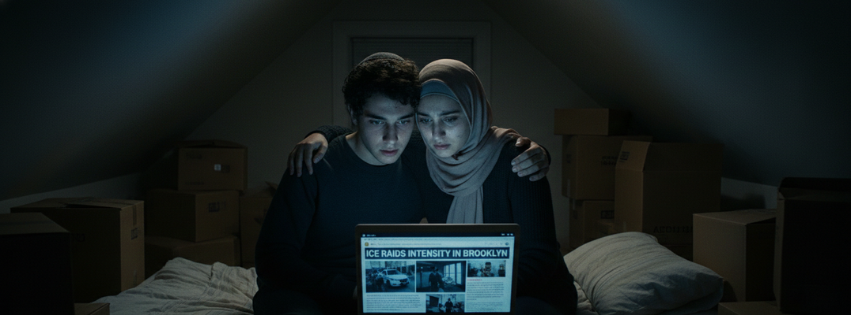
As ICE presence in the neighborhood escalates, the ICE activity intensifies in the neighborhood. The family disagrees on risk. News footage mirrors family arguments. Leah’s fear of consequence clashes with David’s belief in moral responsibility. Leah fears history repeating itself—from a different angle. Amira learns she may be able to escape again—but doing so would mean disappearing entirely. She must decide whether survival means running or trusting.
Act IV – Choice
As authorities close in, the family must confront what it truly means to say “never again” and choose between safety and conscience. The intimate yet non-explosive climax hinges not on escape, but on moral action— defined by who speaks, who hides, who bears witness and who is willing to be seen.
Themes
- The universality of fear under persecution
- Sanctuary vs. legality
- Generational trauma and moral inheritance
- Inherited history vs. chosen empathy
- The immigrant story as American identity
- The radical power of sheltering another human being
- Visibility as both danger and power
TONE & CINEMATIC LANGUAGE
Minimalist, intimate, and restrained. Long silences. Natural light. The tension lives in footsteps, doorbells, and the sound of laughter that must be stopped mid-breath. The camera remains close—trapping the audience in Amira’s confinement while the world moves freely outside. Hope exists—but it’s fragile, earned, and human.
AUDIENCE & PRESTIGE POSITIONING
This film is designed for festival premiere and awards consideration, appealing to audiences of Son of Saul, Roma, The Zone of Interest, and Never Rarely Sometimes Always. A conversation-starter that refuses easy answers and lingers long after the final frame.
Example Film Stills
More Film Related Gigs